Loading...
Earth: The Blue Marble from Space
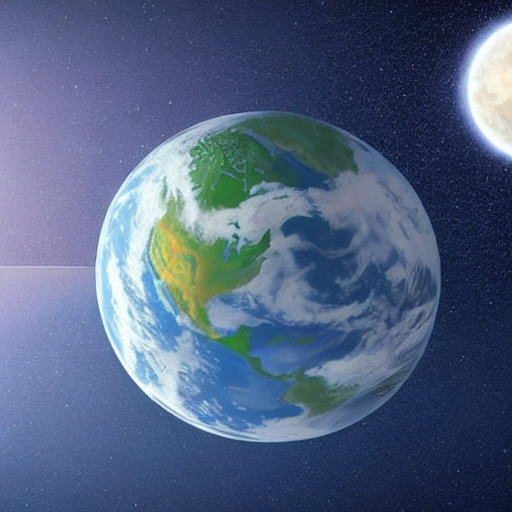
When astronauts first glimpsed Earth from space, they were struck by its mesmerizing beauty
a vibrant blue marble set against the infinite blackness of the cosmos.
This unique blue color, primarily due to the planet's abundant water and atmospheric scattering of sunlight, makes Earth distinct in our solar system. From space, Earth's appearance is marked by swirling white clouds, vast blue oceans, lush green forests, and arid brown deserts, creating a mosaic of life and geological diversity.
Earth's Atmosphere: Layers and Importance
Encasing this blue marble is Earth's atmosphere, a multi-layered veil that protects and sustains life.
The atmosphere is divided into five main layers: the troposphere, stratosphere, mesosphere, thermosphere, and exosphere. Each layer has unique characteristics and functions.
-
The Troposphere:
The closest layer to Earth's surface, where weather occurs and life thrives. It extends up to about 12 kilometers and contains the majority of the atmosphere's mass.
-
The Stratosphere:
Ranges from 12 to 50 kilometers above Earth. It houses the ozone layer, which absorbs and scatters ultraviolet solar radiation, protecting living organisms from harmful UV rays.
-
The Mesosphere:
Extends from 50 to 85 kilometers above the planet. It is where meteors burn up upon entering the atmosphere.
-
The Thermosphere:
Ranges from 85 to 600 kilometers. It contains the ionosphere, which is crucial for radio communication.
-
The Exosphere:
The outermost layer, gradually fading into space.
These layers work together to maintain Earth's climate, protect life from space hazards, and enable essential processes like respiration and photosynthesis.
The Water Cycle: Earth's Vital System
Central to life on Earth is the water cycle, an intricate system that moves water through the atmosphere, land, and oceans. The cycle includes processes such as evaporation, condensation, precipitation, and runoff. Water from oceans, rivers, and lakes evaporates into the atmosphere, forms clouds, and eventually falls back to Earth as precipitation. This continuous cycle not only sustains life by providing fresh water but also regulates temperature and weather patterns, making it critical for maintaining ecosystems and human activities.
Plate Tectonics: Shaping the Earth's Surface
Beneath the atmosphere and oceans lies Earth's dynamic crust, divided into several large and small tectonic plates. The theory of plate tectonics explains how these plates move and interact, shaping Earth's surface over millions of years. Plate movements cause earthquakes, volcanic activity, and the creation of mountain ranges. For instance, the Himalayas were formed by the collision of the Indian and Eurasian plates. This geological activity plays a fundamental role in recycling nutrients, forming landmasses, and creating diverse habitats for life.
Earth's Magnetic Field: A Protective Shield
Surrounding Earth is its magnetic field, generated by the movement of molten iron within the planet's outer core. This magnetic field extends far into space and forms the magnetosphere, which shields Earth from harmful solar wind and cosmic radiation. Without this protective shield, solar particles would strip away the atmosphere and expose the surface to intense radiation, making life as we know it impossible.
Biodiversity on Earth: A Planet of Life
Earth's capacity to support a vast array of life forms is unparalleled. From the deepest oceans to the highest mountains, ecosystems teeming with biodiversity cover the planet. Rainforests, coral reefs, deserts, and tundras each host unique species adapted to their environments. This incredible biodiversity is crucial for ecosystem stability, providing services such as pollination, nutrient cycling, and climate regulation. Preserving this diversity is vital for maintaining ecological balance and human well-being.
Climate Change: Current Trends and Future Implications
However, Earth's delicate balance is under threat from climate change. Human activities, particularly the burning of fossil fuels and deforestation, have increased greenhouse gas concentrations in the atmosphere, leading to global warming. Current trends show rising temperatures, melting polar ice, and more frequent extreme weather events. If these trends continue, they could have severe implications for ecosystems, sea levels, and human societies. Addressing climate change requires urgent action to reduce emissions and implement sustainable practices.
The Moon: Earth's Natural Satellite
The Moon, Earth's natural satellite, plays a significant role in our planet's dynamics. Formed approximately 4.5 billion years ago, likely from a colossal impact, the Moon influences tides, stabilizes Earth's axial tilt, and affects the planet's rotation. Its phases, from new moon to full moon, have been a source of fascination and a tool for timekeeping throughout human history.
Human Impact on Earth: Conservation and Sustainability
Human activities have profoundly impacted Earth's environment. Industrialization, urbanization, and resource exploitation have led to habitat destruction, pollution, and biodiversity loss. To ensure a sustainable future, conservation efforts and sustainable practices are essential. Protecting natural habitats, reducing carbon footprints, and promoting renewable energy sources are crucial steps in preserving the planet for future generations.
Earth, our beautiful blue marble, is a complex and dynamic planet with a rich tapestry of life and geological activity. From its protective atmosphere and vital water cycle to the shifting tectonic plates and magnetic field, each element plays a critical role in sustaining life. As stewards of this remarkable planet, it is our responsibility to understand, appreciate, and protect it, ensuring that Earth remains a thriving home for all its inhabitants.