Loading...
B2x Banner 0001-04 (image left)
Banner 0001-04
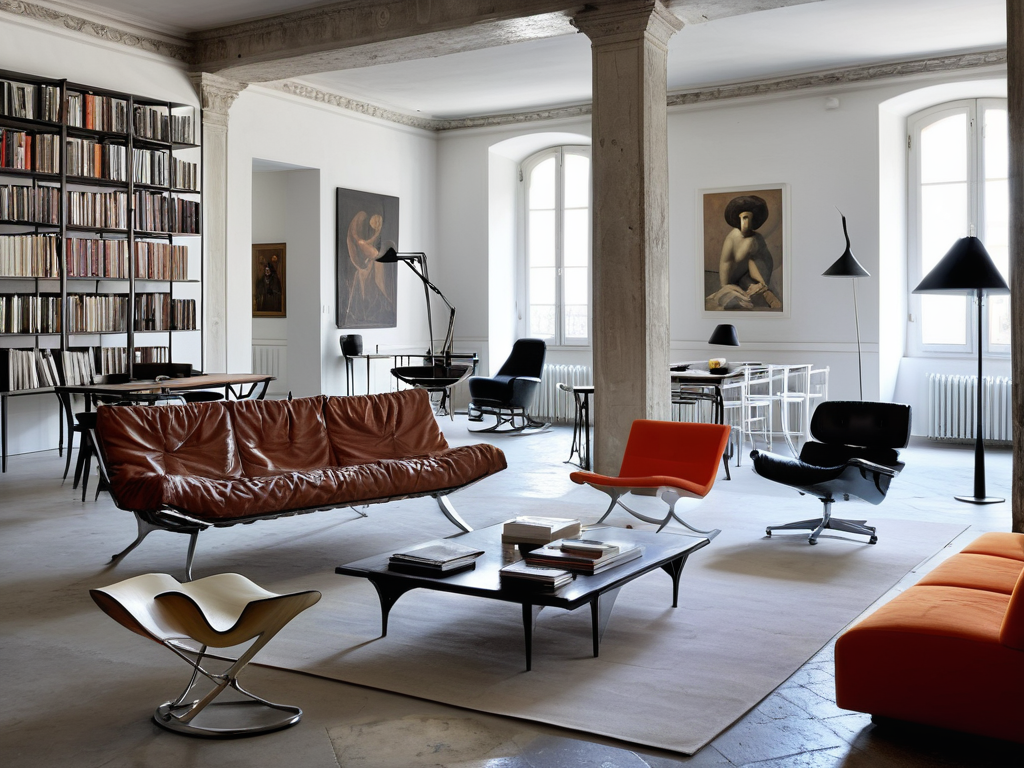
The Egg chair, designed by Danish architect Arne Jacobsen in 1958 for Copenhagen's SAS Royal Hotel, represents one of the most distinctive furniture designs of the 20th century. Jacobsen, who designed everything in the hotel from the building itself down to the cutlery, created the Egg using innovative techniques for the time - sculpting the chair's shape first in clay to perfect its curves before producing it in foam and upholstery.
The chair's distinctive form offered both visual privacy and acoustic dampening in the hotel's lobby, while its swivel base allowed guests to turn away from the bustle of hotel life. The curved shell, which seems to float above its star-shaped aluminum base, creates a cocoon-like embrace that continues to captivate users today.
What makes the Egg particularly remarkable is how it challenged the prevailing aesthetic of straight lines and geometric forms common in modernist furniture. Its organic, sculptural form represented a softer, more human-centered approach to modernism. Originally covered in fabric, the chair was later also produced in leather, each version highlighting the sophisticated curves of its shell.
Today, manufactured by Fritz Hansen, the Egg remains an icon of Danish design, embodying Jacobsen's meticulous attention to detail and his ability to merge functionality with striking form.


B2x Banner 0001-03 (image overlay)
Banner 0001-03
Inside the meticulously curated loft, the massive Gerhard Richter painting dominates the double-height wall, its abstract sweeps of color creating a mesmerizing focal point that commands attention from every angle. The painting's bold streaks of crimson, cobalt, and emerald seem to dance across the canvas, casting an enigmatic energy throughout the open space.
The loft itself is a masterful blend of industrial heritage and refined modernism. Original steel beams traverse the ceiling, their raw texture contrasting with smooth polished concrete floors below. Floor-to-ceiling windows flood the space with natural light, their black steel frames echoing the industrial aesthetic while offering panoramic city views.
The result is a space that feels both gallery-like and deeply livable, where the dramatic impact of museum-quality art meets the comfort and functionality of a contemporary home. The Richter painting, with its complex layers and emotional depth, transforms the loft into more than just a living space – it becomes a daily dialogue between art, architecture, and the rituals of modern life.

Contentful Banner 0001-01
Banner 0001-01
Verner Panton (1926-1998) revolutionized modern design with his bold, futuristic vision. His signature creation, the Panton Chair (1960), was the first single-piece injection-molded plastic chair, becoming an icon of pop culture. Known for his experimental use of plastics, vibrant colors, and geometric patterns, Panton broke from traditional Scandinavian design aesthetics. His immersive interiors, like the Spiegel Publishing headquarters and Varna restaurant, created complete environments merging furniture, lighting, and textiles. Despite waning popularity in the 1980s, his influence resurged in the 1990s and continues to inspire contemporary design through his innovative material use and psychedelic aesthetic.

Banner-00005-fullheight
Banner-00005-fullheight
Edward Barber and Jay Osgerby, who founded their London-based design studio BarberOsgerby in 1996, have become leading figures in contemporary design. While they work as a duo, Osgerby's influence is particularly notable in their practice that spans furniture, lighting, and industrial design.
Their breakthrough came with the Loop Table (1996), created while they were still Royal College of Art students. The piece's innovative structure and clean aesthetics set the tone for their future work. Their most recognized design is perhaps the London 2012 Olympic Torch, which featured 8,000 laser-cut perforated holes representing each torch bearer.
The studio's collaboration with major manufacturers has produced numerous iconic pieces. For Vitra, they created the Tip Ton chair (2011), which revolutionized school seating with its forward-tilt mechanism. Their work with B&B Italia resulted in the Tobi-Ishi table (2012), whose sculptural base draws inspiration from Japanese gardens.
The Barber and Osgerby aesthetic is characterized by experimental use of color, material innovation, and a deep understanding of manufacturing processes. Their Pacific Chair for Vitra (2016) exemplifies their approach to office furniture, combining ergonomic excellence with visual lightness.
Other notable projects include collections for Flos lighting, the Pilot Chair for Knoll, and various pieces for Cappellini. Their work is held in permanent collections worldwide, including the V&A Museum in London and the Metropolitan Museum of Art in New York.
What sets their practice apart is their research-driven approach and attention to how people interact with objects in real-world settings. Their designs often appear simple at first glance but reveal sophisticated engineering and thoughtful details upon closer inspection.
B2x Banner 0001-02 (image)
Banner 0001-02

Text fullwidth in H2 (Headline)
Text fullwidth in H3 (Sub Headline)
Überall dieselbe alte Leier. Das Layout ist fertig, der Text lässt auf sich warten. Damit das Layout nun nicht nackt im Raume steht und sich klein und leer vorkommt, springe ich ein: der Blindtext. Genau zu diesem Zwecke erschaffen, immer im Schatten meines großen Bruders »Lorem Ipsum«, freue ich mich jedes Mal, wenn Sie ein paar Zeilen lesen. Denn esse est percipi - Sein ist wahrgenommen werden.
Subheadline H3
Und weil Sie nun schon die Güte haben, mich ein paar weitere Sätze lang zu begleiten, möchte ich diese Gelegenheit nutzen, Ihnen nicht nur als Lückenfüller zu dienen, sondern auf etwas hinzuweisen, das es ebenso verdient wahrgenommen zu werden: Webstandards nämlich. Sehen Sie, Webstandards sind das Regelwerk, auf dem Webseiten aufbauen.
Another Subheadline in H4
So gibt es Regeln für HTML, CSS, JavaScript oder auch XML; Worte, die Sie vielleicht schon einmal von Ihrem Entwickler gehört haben. Diese Standards sorgen dafür, dass alle Beteiligten aus einer Webseite den größten Nutzen ziehen. Im Gegensatz zu früheren Webseiten müssen wir zum Beispiel nicht mehr zwei verschiedene Webseiten für den Internet Explorer und einen anderen Browser programmieren. Es reicht eine Seite, die - richtig angelegt - sowohl auf verschiedenen Browsern im Netz funktioniert, aber ebenso gut für den Ausdruck oder die Darstellung auf einem Handy geeignet ist.
Wohlgemerkt: Eine Seite für alle Formate. Was für eine Erleichterung. Standards sparen Zeit bei den Entwicklungskosten und sorgen dafür, dass sich Webseiten später leichter pflegen lassen. Natürlich nur dann, wenn sich alle an diese Standards halten. Das gilt für Browser wie Firefox, Opera, Safari und den Internet Explorer ebenso wie für die Darstellung in Handys. Und was können Sie für Standards tun? Fordern Sie von Ihren Designern und Programmieren einfach standardkonforme Webseiten. Ihr Budget wird es Ihnen auf Dauer danken. Ebenso möchte ich Ihnen dafür danken, dass Sie mich bis zum Ende gelesen.
Maps 00001 (default)
__Mindcurv GmbH__
Alfredstrasse 66
45130 Essen
Phone: +49 201 99986 30
Fax: +49 201 99986 399
Email: impressum@mindcurv.com
Alfredstrasse 66
45130 Essen
Phone: +49 201 99986 30
Fax: +49 201 99986 399
Email: impressum@mindcurv.com
Loading...